 Reviews


 Proudly American


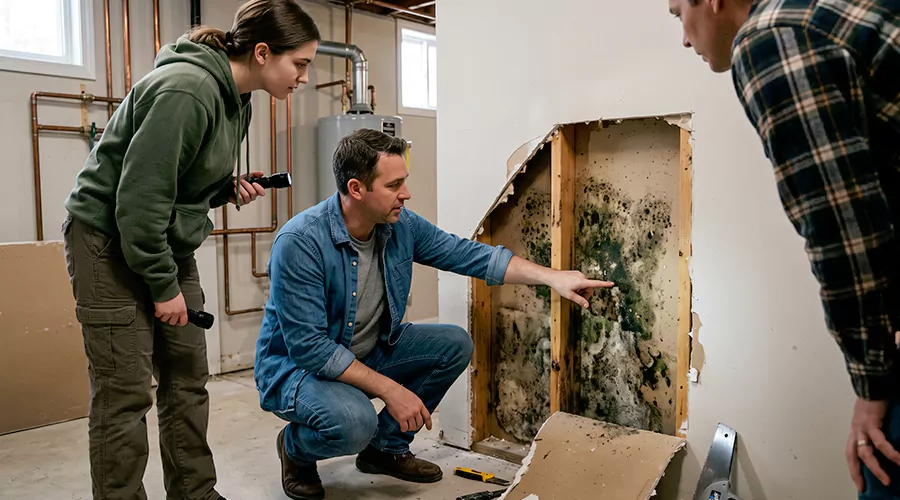
Mold may be growing behind walls when a room has a persistent musty odor, recurring water stains, soft drywall, bubbling paint, or a known history of leaks even though little mold is visible. Hidden mold commonly develops on the backside of drywall or around pipes where moisture can stay trapped.
What Are the Most Common Signs of Mold Behind a Wall?
Hidden mold often reveals itself through changes in the finished wall before visible growth appears. Moisture can affect paint or trim while the main growth remains on the back of drywall.
Watch for these signs:
- A musty smell has no visible source.
- Paint bubbles or peels repeatedly.
- Drywall feels soft or swollen.
- Water stains continue spreading.
- Baseboards swell near one section.
- Mold returns after surface cleaning.
- Wallpaper begins lifting.
- The wall stays unusually cool or damp.
- Moisture readings remain high.
- A past plumbing or roof leak affected the area.
EPA guidance specifically notes that hidden mold can occur on the backside of drywall, behind paneling, around pipes, beneath carpets, and inside other concealed damp areas.
Why Does Hidden Mold Grow Behind Walls?
Mold behind walls usually begins because moisture enters the cavity and cannot dry quickly.
Common moisture sources include:
- Leaking supply or drain pipes
- Roof water entering an exterior wall
- Condensation around cold pipes
- Water from an upstairs bathroom
- Previous flooding that was not fully dried
- High indoor humidity
The CDC states that excess moisture is the main cause of indoor mold growth. Mold can grow on wood, drywall, insulation, and other building materials when damp conditions persist.
Can You Smell Mold Behind a Wall?
Yes. A persistent musty odor without an obvious visible source is one of the strongest reasons to investigate hidden moisture. Some compounds produced by mold create the characteristic moldy smell associated with indoor growth. (US EPA)
Odor is especially useful when it is strongest near:
- A specific wall section
- Plumbing fixtures
- Closets on exterior walls
- Areas below bathrooms
- A previously repaired leak
What Does Hidden Mold Do to Drywall?
Drywall can show physical damage before mold becomes visible on the painted face. Water may soften the gypsum core while the paper facing supports growth on the hidden side.
| Wall Condition | What It May Suggest |
|---|---|
| Small dry stain | Old water exposure |
| Growing stain | Active or recent moisture |
| Bubbling paint | Moisture behind finish |
| Soft drywall | Significant saturation |
| Swollen baseboard | Moisture near floor level |
| Musty odor | Possible hidden growth |
Water mold damage is more likely when these changes occur together rather than as one isolated cosmetic defect.
Can a Moisture Meter Detect Mold Behind Walls?
A moisture meter cannot detect mold itself, but it can identify areas that are wetter than comparable dry surfaces.
A safe comparison test is:
- Choose a similar dry wall.
- Record its moisture reading.
- Test several points on the suspicious wall.
- Mark unusually wet locations.
- Repeat the readings the next day.
- Check whether moisture is declining or staying high.
Do not assume one high reading proves mold. The meter is most useful for finding a moisture pattern that deserves closer inspection.
Should You Cut Open a Wall to Look for Mold?
Not as a first step. Opening drywall can disturb hidden growth and release dust into the room. Wiring or plumbing may also be concealed behind the surface. EPA guidance warns that investigating hidden mold can be difficult because disturbing concealed growth can release spores. A visual inspection and moisture investigation should come before unnecessary demolition. If a wall must be opened, the work area should be planned around the possible contamination rather than treated like an ordinary drywall patch.
Does Mold Testing Confirm Hidden Mold?
The CDC does not recommend routine mold testing because short-term samples can miss actual building conditions. Visual inspection and musty odors are often more useful for locating damp areas.
The first questions should be:
- Was there a leak?
- Is the material still wet?
- Is there a persistent musty smell?
- Are wall finishes changing?
When Should You Call a Professional?
Professional assessment is appropriate when hidden growth is strongly suspected or opening the wall could spread contamination. It is also useful when the moisture source cannot be identified.
Consider professional help when:
- A musty smell persists with no visible source.
- Moisture readings stay high.
- Mold returns after surface cleaning.
- Several walls are affected.
- Sewage or contaminated water entered the cavity.
- HVAC components may be involved.
- The affected area appears larger than about 10 square feet.
Mold damage restoration may require controlled wall opening when contamination extends into insulation or concealed framing.
How Can You Prevent Mold Behind Walls?
Preventing hidden growth depends on keeping wall cavities dry. Repair plumbing or roof leaks promptly and dry any wet building materials within 24 to 48 hours when possible. EPA guidance emphasizes moisture control as the key to preventing indoor mold. (US EPA)
Use this routine:
- Check beneath sinks monthly.
- Watch ceilings after heavy rain.
- Inspect plumbing connections several times a year.
- Investigate recurring condensation.
- Keep indoor humidity below 60 percent when possible.
- Act quickly after a leak.
Conclusion
Hidden mold is most likely when moisture evidence and a persistent musty odor occur in the same area. Bubbling paint or soft drywall can provide additional clues, but no single symptom confirms what is behind a wall. Start by finding the moisture source and comparing moisture levels. If the wall needs to be opened or contamination appears widespread, professional assessment can help limit unnecessary disturbance.
Frequently Asked Questions
Can mold grow behind a wall without visible stains?
Yes. Mold can grow on the backside of drywall while the painted surface still looks normal.
What does hidden mold usually smell like?
It is often described as musty or earthy. A persistent odor without a visible source deserves investigation.
Can a moisture meter find mold?
No. It finds excess moisture rather than mold, but that information can help locate conditions that support growth.
Does bubbling paint always mean mold?
No. It usually indicates a moisture or adhesion problem. Mold becomes more likely when odor or continued dampness is also present.
Should I drill a hole to check for mold?
Not casually. Disturbing a contaminated cavity can spread spores and may damage concealed wiring or plumbing.
Can mold behind walls return after cleanup?
Yes. It can return if the leak or humidity problem that caused the original growth is not corrected.